20 Pro Suggestions For Picking Termite Extermination Services In Jakarta
Wiki Article
Termite control strategies in Java Indonesia
The term “island-wide inclusion” seems like a massive infrastructure goal. But for Jakarta’s anti-termite programs, it's an in-depth forensic science derived from biogeography. This city is like an ecological island. It's surrounded by concrete, compacted soil as well as utility trenches. The same rules that were used to determine which termites settled Krakatau later on after 1883 determine whether or not a Coptotermes could cross a five-meter concrete driveway to get to a Menteng Villa. Exclusion does not mean poisoning all termites in Jakarta. It is the engineering conditions that make it impossible to cross.
1. It's always better to sterilize than poison.
The only way to ensure complete island eradication is total sterilization, followed by quarantine. In Jakarta heating the infested wood removed during renovation is the only known method for eliminating the island. In the event of sending wood that has been infested to a landfill, the colony will not be eliminated. All infested wood debris must be incinerated on site by exterminators.
2. Exclusion zones can be created through soil chemical processes
Certain Indonesian islands lack termites that feed on soil due to their soils being too alkaline or too nutrient-poor. Jakarta's anti-termite program can replicate this locally. Utilizing buffered or agricultural sulfur acid pH can be altered beneath slabs around the edges of foundations, creating the perfect substrate for fungus-growing fungus termites can't tunnel through. The soil does not have to be poisonous. The soil doesn't have to be toxic. to be toxic.
3. The Colony's Lifeline is Connectivity.
Subterranean Termites do not constitute an individual intruder; they are a superorganism spreading across tunnels foraging. Severing landscape connectivity--removing wooden fences that contact soil, replacing organic mulch with river stone, eliminating brush piles and timber debris--fragments the colony into isolated pockets that eventually starve. The property line is where the island-wide ban begins and ends, not at the wall of the foundation.
4. Macrotermitinae cannot cross the road.
To maintain their symbiotic gardens, termites that grow fungi like Microtermes, Macrotermes and Odontotermes require soil. Contrary to Coptotermes which build tubes of protection over concrete forever Fungus eaters are unable to build satellite nests within isolated planter-boxes or elevated planters. This entire feeding guild is permanently excluded by an ongoing vapor barrier beneath the entire structure.
5. Tanjung Port Port is Jakarta's Achilles Heel
As soon as infected timber is brought into the quarantine zone then the island's isolation falls in pieces. Tanjung Priok is witness to a continuous flow of shipping pallets, decorative crates, reclaimed furniture, imported landscaping materials, reclaimed wooden crates, and imported wood furniture entering Jakarta. These objects carry Nasutitermes and Coptotermes colonies. Anti-termite inspections should not only focus on only the structure in use but also all wood that is brought into the property after treatment.
6. Wood species are exclusions to infrastructure
Jakarta's wood supply is controlled mostly by Acacia mngium, Paraserrianthes Falcataria (rubberwood) and Hevea brasiliensis. The three species are all non-durable, and they are extremely attracted by subterranean termites. It's like placing bait stations in the shape of a structure by naming the species you want to use for doorframes, window jambs, and structural repairs. To prevent species, lists of prohibited species should be included in the renovation contract.
7. Foraging highways are prone to water gradients
Termites build mud tubes, not to build mud tubes because they like construction but because their cuticles desiccate at a level below 70% relative humidity. The water gradient that is caused by evaporative surfaces such as dripping hoses, poorly graded plant beds, or leaky condensate pipe for the air conditioner, is a powerful attractant. Exclusion fails when moisture audits are omitted from routine inspections.
8. Above-Ground colonies indicate security breaches at the perimeter
Coptotermes Gestroi achieves true island colonization when it creates cardboard nests in wall cavities or rooftop spaces. The colonies can live for years without soil access. Exterminators who find aerial nests must treat the structure as a fully invaded island requiring total enclosure fumigation, or complete heat eradication.
9. Baiting Is Surveillance, Not Exclusion
Perimeter baiting stations do not exclude termites. They are able to remove colonies from the station's foraging zone. They can also serve as feeding stations that allow colonies to survive dry times. For true exclusion, you need physical barriers that include stainless steel mesh, graded stones, polymer membranes or bonded sand that are installed during construction or retrofitted through excavation around the perimeter.
10. The 1.6M Houses The Precedent
Dutch colonial officials rebuilt or renovated 1.6 million Javanese houses between 1911 and 1941, in an unprecedented exclusionary program that targeted plague-infested, bamboo construction. They achieved their goal of eradicating the plague, but they did not succeed in terms of culture; bamboo was banned as was traditional housing stock destroyed, and vernacular knowledge severed. Jakarta termite control today has to be aware that any exclusion without consent is viewed as the erasure. Exclusion strategies that homeowners understand and choose to adhere to are the most effective.
The article's conclusion is:
The removal of termites from an entire island isn't possible by using chemical application schedules. This is achieved through the manipulation of habitats, material quarantine, and physical barriers, as well as deliberate engineering to create an inhospitable soil. Krakatau's eruption proved that strict quarantine as well as complete sterilization could result in the elimination of termites on a 100-year-scale. Jakarta's termite control services can't replicate volcanic eradication. However, they are able to apply every other lesson the island's biogeography has taught. Termites cross water floating timber. Termites cross the pavement by using edges of concrete. They traverse the property line with organic mulch. Exclusion is the practice of eliminating every available vessel. Have a look at the top rated jasa basmi rayap for blog info including penyebab rayap, pengendalian hama, bahan lemari anti rayap, jasa basmi hama, rayap kecil, bahan lemari anti rayap, jasa basmi hama, anti rayap terbaik, perusahaan pest control, jasa rayap and more.
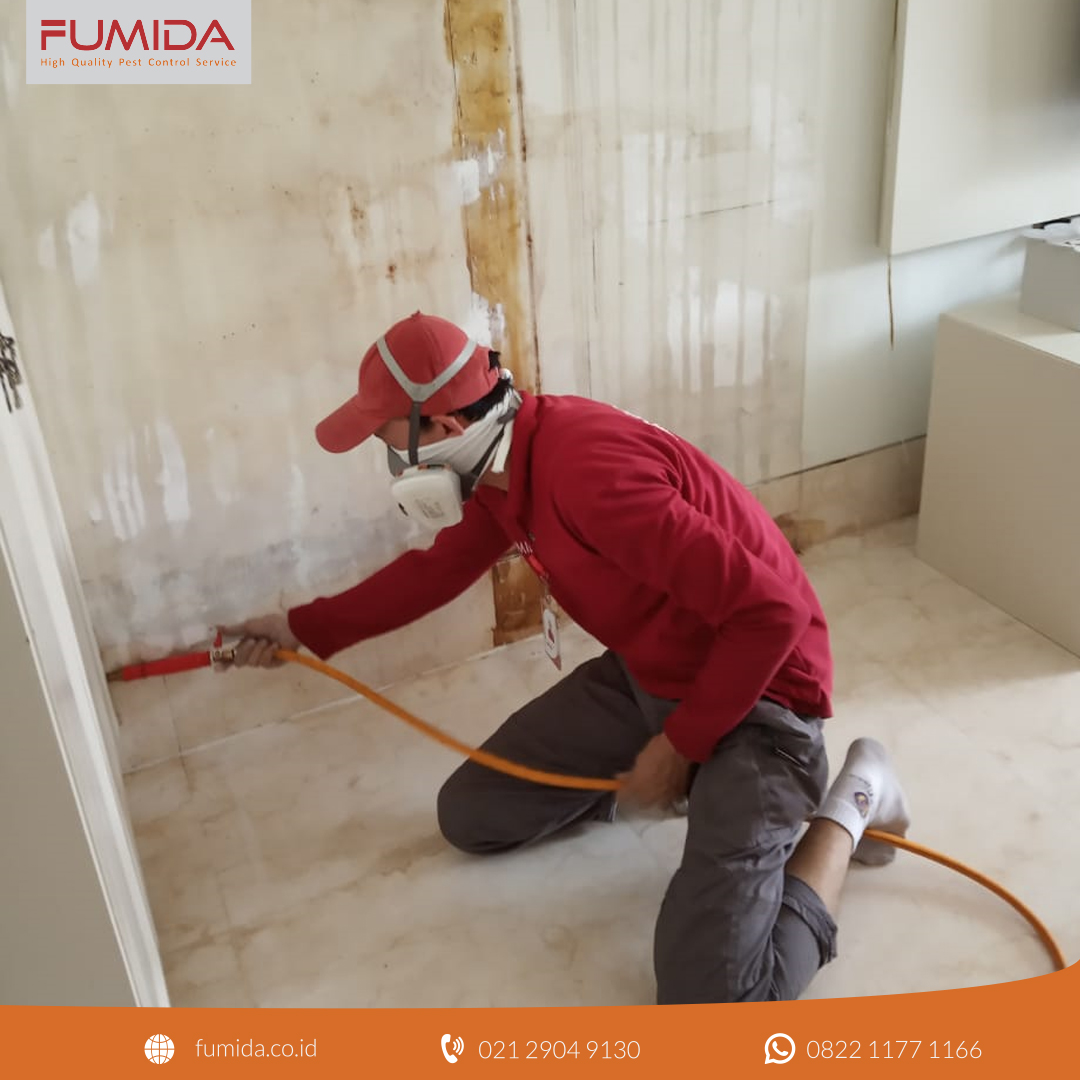
Alternatives To Fumigation For Indonesian Villas, Like Jakarta
Indonesian villa homeowners have been trained to think tent fumigation can be the only solution when termites invade wall spaces, or even embedded timbers. Fumigation companies propagate and reinforce this myth and are backed by the anxiety of homeowners. The tent falls on the neighbor, the family members leave the home for three full days, colony within the walls ceases to exist. After 18 months, the community within your garden will re-build the tunnels to eat, unaffected by the gas. Fumigation sterilizes buildings but does not affect the landscape reservoirs. Offering alternatives to Jakarta termite control service that is available to the market for villas isn't charity, but rather an opportunity to establish themselves in a competitive market. Customers who own eight-bedroom homes in Pondok Indah and vacation compounds in Puncak do not want tenting. They would like to eradicate the colony, without the glitz of evacuation, and without the threat of the possibility of re-infestation.
1. Fumigation Kills Inside Termites Baiting kills colonies
The tent fumigation delivers a lethal gas concentration into every crevice within the envelope of the building. Every termite in the structure is killed. The colony within the soil beneath the garden, driveway or neighbor's property does not die. Trophallaxis is the mechanism by which poison is injected via baiting to colony nucleus. The colony dies. The structure becomes reinfestation-resistant because the source population is eliminated. Most homeowners that are aware will not decide to apply fumigation more than once.
2. Heat Treatment Permeates Where Gas is Not able to
The wood is heated to 50°C over an entire hour. This process kills all living organisms, including the eggs. It is not necessary to tent, and there are no chemicals left in the wood. Indonesian villas with beams exposed construction, elaborate carvings and heritage timber are candidates for heating treatment. The equipment is available. Contractors are present. The constraint is not technology; it is homeowner awareness that alternatives are available.
3. Electro-Gun Technology - Localized Infections
Microwave devices emitting high-frequency radiation stimulates the water molecules of wood to produce deadly heat. They don't affect other materials. The electro-gun treatment is employed by owners of villas who discover active termites on the door frame or roof truss. The termite infestation is eradicated within a single treatment without the need to evacuate the house. Jakarta exterminators decided not to import this commercial technology. This isn't an experimental method.
4. Wood Injection Systems Preserve Architectural Fabric
The borate-based liquid formulations which are injected into drill holes when pressure is applied, migrate through the wood via capillary action, making the entire element toxic for termites for a long time. The drill holes are less than the nail holes that are currently in use. The carvings are intact. The door frame remains in place. Indonesian homeowners often do not accept this method when exterminators offer it after they suggest replacement. If it is offered prior to replacement, the injections are generally approved.
5. Baiting Above Ground to Find Hidden Cavity Colonies
Tent fumigation, as a standard procedure, is employed when Coptotermes gesturi constructs an aerial nest inside walls or voids. The bait stations above ground, which are locked to the active tubes of mud that emerge from the ceiling corners, deliver the poison directly to the nesting population. The colony consumes its own members as they go back to the tube. No tent. No evacuation. No evacuation.
6. Nitrogen Freezing for Small-Scale Heritage Components
The termites are swiftly trapped by the liquid nitrogen that circulates inside sealed chambers that surround the wood. The cycle of freezing and then thawing is repeated. It is not chemical baiting but rather cryogenic. The freezing of nitrogen can help keep the patina on museum-quality Javanese furniture or carvings. Treatment with heat or injection could darken it.
7. Physical Barrier Retrofits Prevent Reinfestation
Renting temporary sterility is the type of property which is able to smoke every year without putting up physical barriers. Retrofitting the polymer or stainless steel sheet with perimeter excavation blocks subterranean colony termites from reentering the building following colony elimination. If it is paired with an permanent exclusion device, fumigation options can be very compelling. The combination is sold by baiting to eradicate the colony and then building the barrier to make it the last colony that will ever occupy the structure.
8. Carbon Dioxide Purging for Enclosed Spaces
Carbon dioxide pressurized into the attic space that is sealed or crawl zones releases oxygen into a lethal level for termites trapped within these space. It is not necessary to tent the entire building and only a small portion of it. CO2 dissipates fast, leaves no traces, and poses a low danger to those who follow re-entry guidelines. Indonesian villas that have termite activity restricted to the roof structures are served by full-building fumigation.
9. Timelines for Baiting have to be disclosed upstream
The termites are eliminated by fumigation after 72 hours. Baiting kills colonies in 6-8 weeks. Villa owners accustomed to the speed of tenting refuse baiting when the timeline is made public after mobilization. Timelines are acceptable if they are revealed prior to the contract is signed. Jakarta antitermite services which conceal the baiting time period up to proposal is delivered are creating their own closing rate issues.
10. The Reservoir Colony Needs to Be Targeted
At least one colony for each villa is situated in the vicinity of an open space, a cemetery, or an undeveloped land. Fumigation disregards this colony. This colony is also ignored by injection, heat treatment or baiting except when they are employed beyond the limits of the structure. Other options for fumigation are landscaping baiting grids that are designed to target the colonies on the outside that could in turn re-infest the house in the course of 18 months. If the exterminators only treat the structure, they're not providing a lasting solution.
Conclusion
Indonesian Villa owners don't want their homes to be evacuated. They do not want tenting equipment staged on their manicured lawns. They don't want to be asked by their neighbors if they are plagued. What they are looking for is the colony dead and the certainty that it won't come back. Fumigation is a proven method to meet the first and second goals, but it does not provide the third. If used in conjunction with other protocols, rather than competing options, baiting, heat treatments and microwave technology nitrogen injection, freezing of wood CO2 purging and retrofits to physical barriers will meet both goals. Jakarta antitermite firms who are promoted as alternative providers for fumigation that offer multiple elimination techniques as well as training technicians on specific protocols for their species and recording the results that will secure the best portion of villas currently controlled by tenting contractors. Equipment investment is significant. The training investments are ongoing. There is a market demand. Villa owners are seeking "fumigation alternatives Jakarta" on a daily basis. There is a question about which exterminators are likely to show up with alternative procedures that have been recorded and are not reverting to tents. Have a look at the best anti rayap for website advice including cara membasmi rayap di lemari, jasa anti rayap surabaya, jasa anti rayap surabaya, lemari anti rayap, jasa pest control, cara basmi rayap, anti rayap untuk kayu, pembasmi rayap, pembasmi rayap kayu, anti rayap untuk kayu and more.
